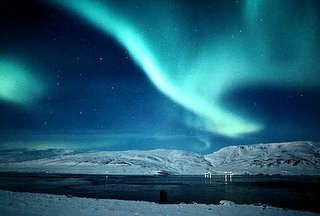
 Hundreds of Japanese tourists have gone home disappointed this winter, after expensive trips to northern Norway failed to produce the Northern Lights they came to see.
The roughly 1,600 Japanese tourists who traveled to Tromsø this winter have been offered alternative trips to local museums, tours of northern wilderness areas and a visit to a local attraction called "Polaria," to avoid them going home much too disappointed.
Most reportedly have appreciated the consolation trips, but are disappointed anyway because they say the Northern Lights can bring happiness, fertility and a good life.
This is not a journey that you can be 100% satisfied.
What causes Northern Lights
Northern lights originate from our sun. During large explosions and flares, huge quantities of solar particles are thrown out of the sun and into deep space. These plasma clouds travel through space with speeds varying from 300 to 1000 kilometers per second.
But even with such speeds (over a million kilometer per hour), it takes these plasma clouds two to three days to reach our planet. When they are closing in on Earth, they are captured by Earth's magnetic field (the magnetosphere) and guided towards Earth's two magnetic poles; the geomagnetic south pole and the geomagnetic north pole.
On their way down towards the geomagnetic poles, the solar particles are stopped by Earth's atmosphere, which acts as an effective shield against these deadly particles.
When the solar particles are stopped by the atmosphere, they collide with the atmospheric gases present, and the collision energy between the solar particle and the gas molecule is emitted as a photon - a light particle. And when you have many such collisions, you have an aurora - lights that may seem to move across the sky.


